How to Build Vocabulary Effectively for Lasting Language Skills
To build vocabulary efficiently, focus on regular exposure to new words, active usage, and contextual learning. Start by reading widely, listening attentively, and using tools like flashcards or apps that promote spaced repetition, which helps transfer vocabulary from short-term to long-term memory.
A strong vocabulary enhances communication, reading comprehension, and overall language skills, making it easier to express ideas clearly and engage with diverse content. Instead of memorizing isolated words, learning vocabulary in context helps deepen understanding and aids recall.
This article will guide you through practical steps to expand your vocabulary, covering methods such as reading strategies, word mapping, conversational practice, mnemonic devices, and digital learning tools. By following these tactics, you'll develop a sustainable habit that grows your vocabulary over time.
Reading Strategies to Build Vocabulary

Extensive Reading for Contextual Learning
Extensive reading involves choosing materials slightly above your current level, allowing you to infer word meanings from context. This reduces reliance on dictionaries and helps you acquire natural usage patterns, collocations, and nuanced meanings.
Books, articles, and blogs on topics that interest you provide motivation while exposing you to new words frequently. Consistent reading enlarges your word bank passively as your brain links meanings to real-life situations.
- Select diverse genres
- Avoid interrupting flow to look up every unknown word
- Make notes of useful words, not all words
Focused Intensive Reading
Intensive reading zeroes in on a short text to thoroughly analyze vocabulary, grammar, and usage. Using a dictionary at this stage clarifies meanings, pronunciations, and word forms, improving precise knowledge of difficult words.
Revisiting the same passage multiple times reinforces learning and enables you to see how words connect in sentences. This method is best combined with extensive reading for balanced vocabulary growth.
- Highlight tricky words
- Look up definitions, synonyms, and usage examples
- Write sentences using those words
Active Techniques to Enhance Vocabulary Retention

Using Flashcards and Spaced Repetition
Flashcards, physical or digital, help isolate vocabulary for repeated review. Spaced repetition software (SRS) like Anki schedules reviews at optimal intervals to reinforce memory and prevent forgetting the words you've learned.
Customizing your flashcards with example sentences and synonyms adds depth beyond simple definitions. This active recall method strengthens your ability to retrieve words spontaneously.
- Create flashcards with context sentences
- Review daily using SRS
- Add images or sound for multisensory learning
For more on this, see our related guide: How to Choose the Best Test Preparation Tutor in Doral FL for Effective Results.
Word Mapping and Semantic Networks
Connecting new vocabulary to related words via mind maps clarifies meanings and relationships, such as synonyms, antonyms, and word families. This method organizes your vocabulary knowledge, making retrieval easier.
Building semantic networks by grouping words around themes or topics links vocabulary in meaningful ways, which improves both comprehension and usage flexibility.
- Draw visual maps connecting words
- Classify words by function or category
- Use colors and symbols for clarity
Conversational Practice and Usage

Incorporating New Words in Speaking
Using new vocabulary actively in conversations solidifies your command over words. Practice with native speakers or language partners to improve pronunciation, fluency, and context application.
The process of retrieving words during speech trains your brain for spontaneous use and builds confidence, which is key to maintaining expanded vocabulary.
- Prepare topic-specific vocabulary lists
- Join discussion groups or language meetups
- Practice aloud regularly
Writing to Reinforce Vocabulary
Writing essays, journals, or emails utilizing new vocabulary forces deliberate application, which deepens understanding. Revising your writing with feedback helps spot errors and correct misused words.
Regular writing expands active vocabulary and improves grammar and spelling, making what you learn more practical and applicable.
- Start a diary with daily entries
- Use new words in emails or social media
- Seek feedback from tutors or peers
Mnemonic Devices and Memory Aids
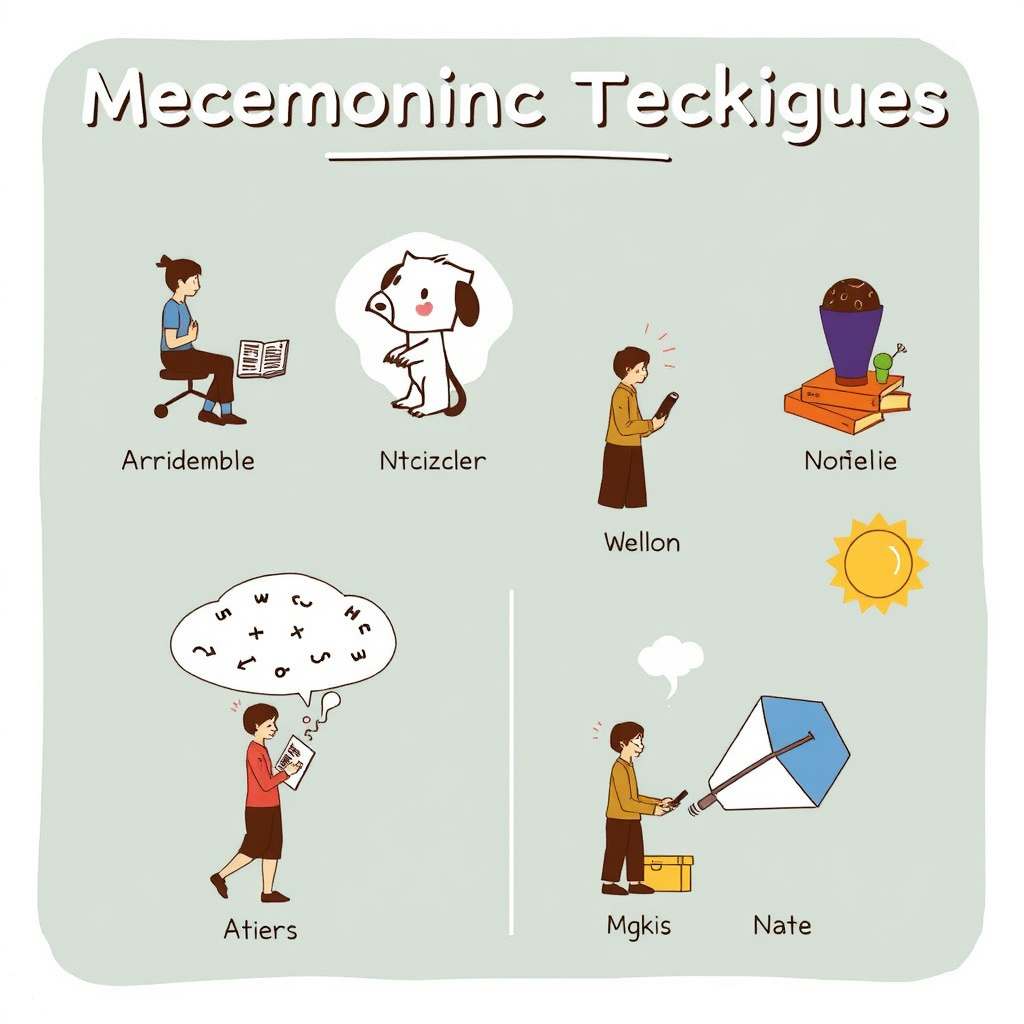
Creating Mnemonics for Difficult Words
Mnemonics use associations between new words and familiar ideas, images, or sounds to improve memorability. For example, breaking down complex words into smaller, meaningful parts aids recall during learning.
Inventing acronyms, rhymes, or funny stories tied to vocabulary connects words emotionally and visually, which can be especially helpful for abstract or challenging terms.
- Link words to vivid images
- Create rhythm or rhymes
- Use familiar words to 'anchor' new vocabulary
For more on this, see our related guide: How to Choose a Reading Comprehension Tutor That Boosts Your Skills.
Visual and Auditory Memory Techniques
Visualization helps by picturing the meaning of words or even the word itself in a distinctive font or color. Listening to words pronounced aloud and repeating them supports auditory memory and pronunciation skills.
Combining both sight and sound strengths your memory because it taps into multiple sensory channels, making vocabulary less likely to fade.
- Watch videos with subtitles
- Record yourself pronouncing words
- Draw pictures illustrating word meanings
Leveraging Digital Tools for Vocabulary Learning
Language Learning Apps and Software
Apps like Memrise, Duolingo, and Quizlet offer gamified vocabulary exercises with spaced repetition and progress tracking. They can provide personalized lessons and instant feedback to help keep learners motivated.
Many apps incorporate speaking, listening, and writing tasks, catering to various learning styles and making vocabulary practice more engaging and accessible.
- Set daily goals
- Use features like pronunciation practice
- Leverage community and challenges
To explore deeper theory behind vocabulary growth, you can read the vocabulary acquisition on Wikipedia. vocabulary acquisition on Wikipedia.
Online Dictionaries and Corpora
Using online dictionaries provides rich entries with multiple examples, pronunciation guides, and usage notes. Corpora and concordancers show how words are used in real text, revealing collocations and typical contexts.
These resources help build deeper awareness not just of a word’s meaning, but also its natural patterns and register, which enriches vocabulary learning techniques.
- Bookmark trusted dictionary sites
- Explore word frequency lists
- Investigate example sentences
Popular Vocabulary Building Methods Compared
Here’s a comparison of common vocabulary learning methods, highlighting their best uses and features for learners at various levels.
| Method | Best For | Advantages | Drawbacks |
|---|---|---|---|
| Extensive Reading | Intermediate and above | Contextual, improves fluency | Slow initial progress, needs patience |
| Flashcards with Spaced Repetition | All levels | Efficient memorization, customizable | Can be repetitive or tedious |
| Conversational Practice | Intermediate and advanced | Active use, improves speaking skills | Requires partners, can be intimidating |
| Mnemonic Devices | Beginners and struggling learners | Enhances memory for tricky words | Time-consuming to create |
| Language Learning Apps | All levels | Interactive, accessible anywhere | Some lack depth or context |
Frequently Asked Questions
How often should I practice to build vocabulary effectively?
Daily practice is ideal, even if for just 10-20 minutes. Frequent repetition strengthens memory and builds a habit that supports ongoing vocabulary growth.
Is it better to learn vocabulary in lists or in context?
Learning vocabulary in context usually leads to better retention and use because it shows how words function naturally rather than as isolated units.
Can watching movies help build vocabulary?
Yes, watching movies with subtitles exposes you to conversational language and idiomatic expressions, reinforcing vocabulary through audio-visual context.
How do I remember difficult or abstract words?
Using mnemonic devices, associating words with images or stories, and revisiting them repeatedly can improve recall of challenging vocabulary.
Should I focus on active or passive vocabulary?
Both are important, but active vocabulary, the words you can use confidently in speech and writing, should be prioritized for effective communication.
Key Takeaways
- Regular exposure and active use improve vocabulary retention.
- Contextual learning beats rote memorization for natural usage.
- Combining reading, speaking, and memory techniques enhances results.
- Digital tools can support and streamline vocabulary growth.
Conclusion
Deciding how to build vocabulary depends on your learning style, goals, and resources. A balanced approach that includes reading extensively for natural exposure, paired with focused study like flashcards or word mapping, offers reliable progress. Mixing active practice through conversation and writing with memory aids creates a well-rounded vocabulary learning routine useful for long-term language mastery.
For learners seeking steady everyday improvement, extensive reading combined with language apps provides engaging input and reinforcement. If your goal is rapid recall and practical speaking ability, integrating flashcards with spaced repetition and frequent conversational practice works well. Mnemonics and visualization particularly help when facing abstract or unusual words you find hard to retain. Tailoring methods to your preferences yields the best vocabulary learning experience.
To begin, set achievable daily goals such as reading a short article or practicing 15 new flashcards and using them in sentences. Explore digital tools and find conversation partners to apply what you learn actively. Monitor your progress over weeks to identify which techniques resonate with you, then expand those activities. This steady, personalized practice leads to confident use of new vocabulary that lasts.