How Much Does Math Tutoring Cost? A Detailed Pricing Guide
Math tutoring costs can vary widely depending on several factors such as the tutor’s experience, location, session length, and whether tutoring is in-person or online. On average, you can expect to pay between $25 to $80 per hour for math tutoring services in the United States. Specialized tutors for high-level math or test prep may charge even more.
Understanding the cost of math tutoring matters because it helps families and students budget effectively while ensuring access to quality help. Tutors with more credentials or advanced degrees usually charge higher rates but may provide more effective instruction. Meanwhile, group sessions or online platforms often offer more affordable options.
This article explores key elements that influence math tutoring costs, compares common tutoring categories, and provides guidance on choosing affordable yet effective math support. You’ll also find answers to frequently asked questions and a breakdown of different tutoring styles.
Factors That Influence Math Tutoring Costs
Tutor Experience and Qualifications
Tutors with advanced degrees in mathematics or education often charge more due to their expertise. Certification and teaching experience contribute significantly to higher hourly rates. A tutor with a master’s degree or a teaching certificate generally demands a premium compared to a college student tutoring peers.
Less experienced tutors or peers tutoring younger students may offer lower rates. However, the price difference reflects the depth of knowledge and ability to tailor instruction to the student's needs.
- Master’s degree tutors: $50-$80 per hour
- Certified teachers: $40-$70 per hour
- College students or peer tutors: $20-$40 per hour
Location and Session Format
Costs differ significantly between urban and rural areas. Urban centers tend to have higher tutoring prices due to demand and cost of living. Also, in-person sessions often cost more than online tutoring because of the travel and facility expenses involved.
Online tutoring platforms offer competitive rates and convenient access, sometimes starting as low as $15 per hour depending on the tutor. Group sessions further reduce costs by splitting the fee among multiple students.
- Urban vs. rural price differences
- In-person tutoring premiums
- Online tutoring affordability
- Group session discounts
Math Tutoring Cost by Education Level

Elementary and Middle School Tutoring Costs
Tutor prices for elementary and middle school range from $20 to $50 per hour. At these levels, tutors focus on basic concepts like arithmetic and introductory algebra, which typically require less specialized knowledge.
Group sessions or community center programs often provide affordable options, while private individual tutoring naturally costs more. Tutors experienced with younger learners tend to charge moderate fees reflecting their specialized teaching methods.
High School and College-Level Tutoring
High school tutoring usually costs between $30 and $70 per hour due to increased complexity such as advanced algebra, calculus, or preparation for standardized tests like the SAT or ACT. College-level math tutoring can push rates higher, especially for specialized subjects like linear algebra or differential equations.
Tutors specializing in test prep or STEM subjects possess knowledge that commands higher fees. Group tutoring or online courses may offer alternative budget-friendly options at these levels.
Popular Tutoring Models and Their Costs
One-on-One Tutoring
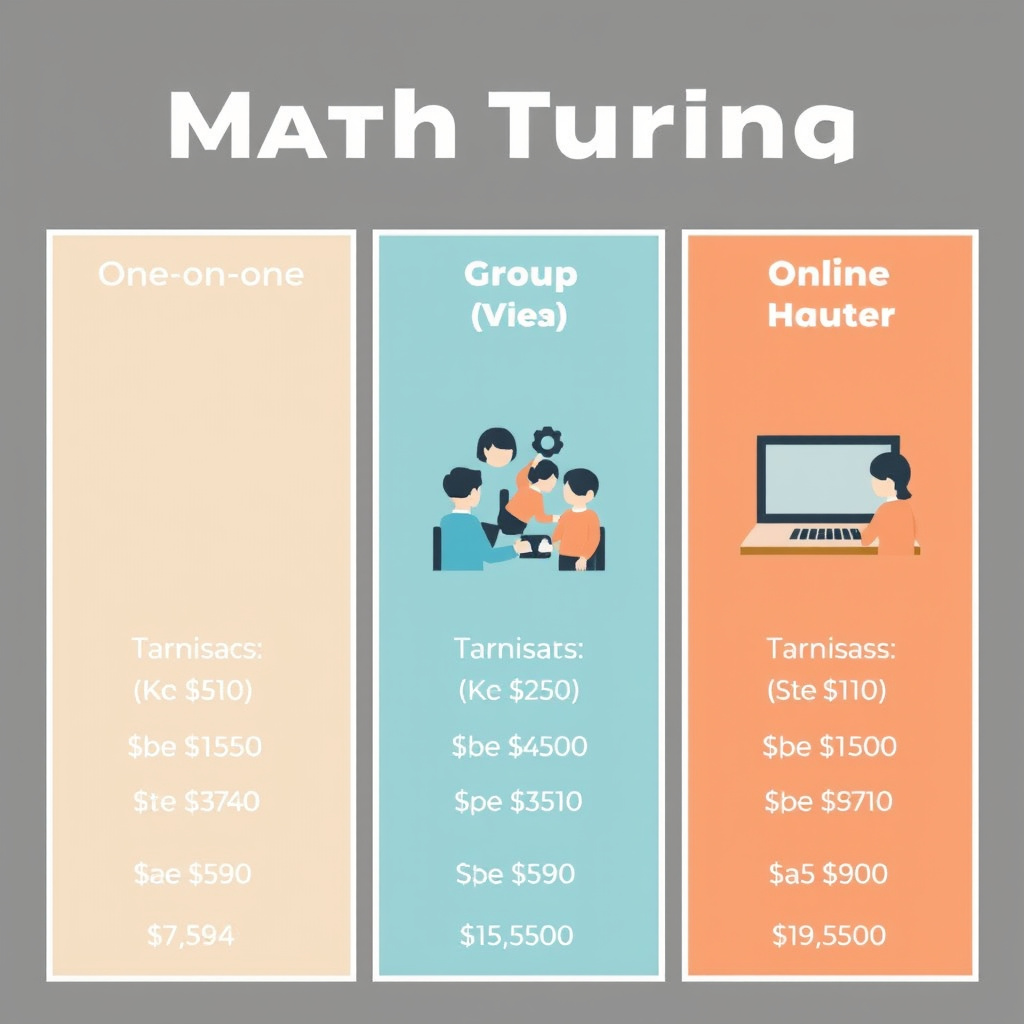
One-on-one tutoring is the most personalized but often the most expensive option, with prices generally ranging from $30 to $80 per hour. This model allows for customized pacing and direct feedback, making it ideal for students needing focused help.
Highly qualified tutors in this format usually charge towards the upper end of the price scale. The cost reflects tailored lesson plans and flexibility.
- Hourly rates $30-$80
- Customized learning pace
- Direct tutor interaction
Group Tutoring and Online Platforms
Group tutoring divides the cost among participants, lowering the price per student to $15-$40 per hour. Though less individualized, group sessions provide collaborative learning environments that can be effective for some students.
Online platforms have grown popular for their affordability, flexibility, and access to a wide range of tutors. Sessions typically cost between $15 and $50 per hour, depending on tutor credentials and platform fees.
- Group sessions: $15-$40 per hour
- Online sessions: $15-$50 per hour
- Less personalized but cost-effective
How to Evaluate Math Tutoring Value

Measuring Tutor Effectiveness
Assess the value of tutoring not only by cost but also by the student’s progress, engagement, and understanding. Effective tutors adapt methods based on the student’s learning style and provide measurable improvements in grades or confidence.
Don’t choose the cheapest option blindly. Sometimes paying more upfront yields better long-term results by addressing difficulties faster and more thoroughly.
Red Flags in Pricing and Service
Extremely low rates might mean inexperienced tutors or minimal preparation, which could waste time and money. Conversely, very high prices do not guarantee quality without credentials or reviews to back them up.
Look for transparency in pricing, clear communication, and trial sessions or guarantees. These indicators help confirm whether the cost reflects genuine educational value.
Tips for Saving on Math Tutoring Costs

Utilizing Online Resources and Communities
Many websites and forums offer free help or low-cost tutoring substitutes, which can supplement paid tutoring. These resources are valuable for basic help or practice between sessions.
Combining self-study with occasional tutor check-ins can reduce overall expenses without sacrificing progress.
- Free math help websites
- Video tutorials and apps
- Online math study groups
Choosing Group Sessions or Shared Tutoring
Participating in group tutoring or sharing a tutor with peers can significantly cut costs. While less personalized, these setups still enhance understanding through discussion and peer support.
Many tutoring centers offer package deals or discounts for multiple sessions, which helps budget-conscious families.
- Group discounts
- Package deals
- Tutoring co-ops
Planning a Budget for Math Tutoring
Estimating Monthly Tutoring Expenses
Decide how many hours per week your student needs and multiply by the hourly rate to get a monthly estimate. For example, 2 hours per week at $40/hour equals about $320 a month.
Adjust this based on session frequency and tutoring type, whether online, group, or private.
- Calculate hours × rate
- Factor in session frequency
- Include additional materials or fees
For a broader understanding about the practice and history of tutoring, check the Math tutoring overview on Wikipedia. Math tutoring overview on Wikipedia.
Balancing Cost with Tutoring Effectiveness
Avoid cutting corners solely based on cost. Partner with tutors who offer trial sessions so you can test their style and effectiveness before committing financially.
Consider prioritizing key subjects or topics during budget-constrained periods.
Comparison of Common Math Tutoring Options
Here’s a side-by-side look at different tutoring models, highlighting their typical costs and benefits to help you decide.
| Category | Average Hourly Cost | Typical Session Length | Best For |
|---|---|---|---|
| Private In-Person Tutoring | $40-$80 | 1-2 hours | Personalized help, specific needs |
| Private Online Tutoring | $25-$60 | 1 hour | Flexible scheduling, wide tutor pool |
| Group Tutoring | $15-$40 | 1-2 hours | Budget-friendly, social learning |
| Peer Tutoring | $15-$30 | 1 hour | Basic help, lower cost |
| Test Prep Specialists | $50-$90 | 1-2 hours | Exam-focused coaching |
| Community Center Programs | Often free-$20 | 1-2 hours | Basic help, low income options |
Frequently Asked Questions
Does the cost of math tutoring vary by subject difficulty?
Yes, tutoring for advanced math topics like calculus or statistics usually costs more than basic arithmetic or pre-algebra due to the specialized knowledge required from the tutor.
Are online math tutoring sessions cheaper than in-person options?
Generally, online tutoring is more affordable because it eliminates travel costs and allows tutors to offer flexible pricing by reaching a broader audience.
How can I verify a math tutor’s qualifications before paying?
Look for verified credentials such as degrees, teaching certifications, and positive reviews. Many platforms offer trial sessions to evaluate fit before committing.
Can group tutoring be as effective as private tutoring?
Group tutoring offers peer support and lower costs, but it may lack the individualized attention that private tutoring provides, which can be essential for students with particular challenges.
Are there affordable math tutoring resources if I’m on a tight budget?
Yes, combining free online resources, community center programs, and group tutoring can provide substantial help without high costs.
Key Takeaways
- Math tutoring costs vary widely based on qualifications, location, and format.
- One-on-one private tutoring is the most tailored but usually most expensive option.
- Group and online tutoring provide affordable alternatives with some trade-offs.
- Evaluating tutor effectiveness matters more than simply choosing the cheapest option.
Conclusion
Determining how much math tutoring costs involves balancing several factors including tutor experience, session format, location, and education level. By clarifying your student’s specific needs and comparing typical prices, you can make an informed decision that provides valuable support without overspending. Keep in mind the importance of a tutor’s ability to connect with and effectively teach the student rather than focusing solely on hourly rates.
For younger students needing foundational help, cost-effective options like group tutoring or community programs might suffice. High school and college students preparing for advanced subjects or exams typically benefit from investing in qualified private or online tutors who specialize in their particular area. Using the price averages and models outlined here can guide you toward the best fit for your budget and goals.
Start by estimating your tutoring budget based on hours needed and average rates, then reach out to prospective tutors or platforms for trial sessions. This step provides practical insight into the tutor’s methods and responsiveness. Combining affordable resources like online practice with periodic personal tutoring brings a balanced and manageable approach to improving math skills over time.