How to Take Notes Effectively: Strategies for Better Learning and Retention
Mastering how to take notes effectively involves more than just writing down words; it requires techniques that help you capture key information clearly and organize it for easy review. Effective note-taking improves retention, focus, and comprehension, enabling you to study smarter and work more efficiently.
Taking notes well matters because raw transcription often leads to information overload and difficulty recalling important points later. When notes are structured with purpose, they become powerful tools for learning, preparing for exams, or executing projects successfully. A few small adjustments to your note-taking habits can dramatically enhance your ability to retain and apply new knowledge.
This article explores the most effective ways to take notes, examining various methods, tools, and tips to tailor your approach to different contexts. Whether you’re in a lecture, meeting, or self-study, you'll find actionable advice that transforms your notes into reliable memory aids.
Understanding the Foundations of Effective Note-Taking

Cognitive Benefits of Structured Notes
Effective note-taking enhances understanding by engaging active listening and critical thinking. Writing organized notes forces your brain to process and summarize information rather than passively recording it.
Structured notes help reduce cognitive load during review sessions by breaking down complex topics into manageable pieces, which eases retrieval from memory over time.
Common Pitfalls to Avoid in Note-Taking
A common mistake is trying to transcribe everything verbatim, which often results in overwhelming, ineffective notes. Another is ignoring formatting, making later review difficult and time-consuming.
Failing to review notes soon after taking them can also lead to quick forgetting. Effective methods often include regularly revisiting notes to reinforce retention and understanding.
Popular Note-Taking Methods to Try
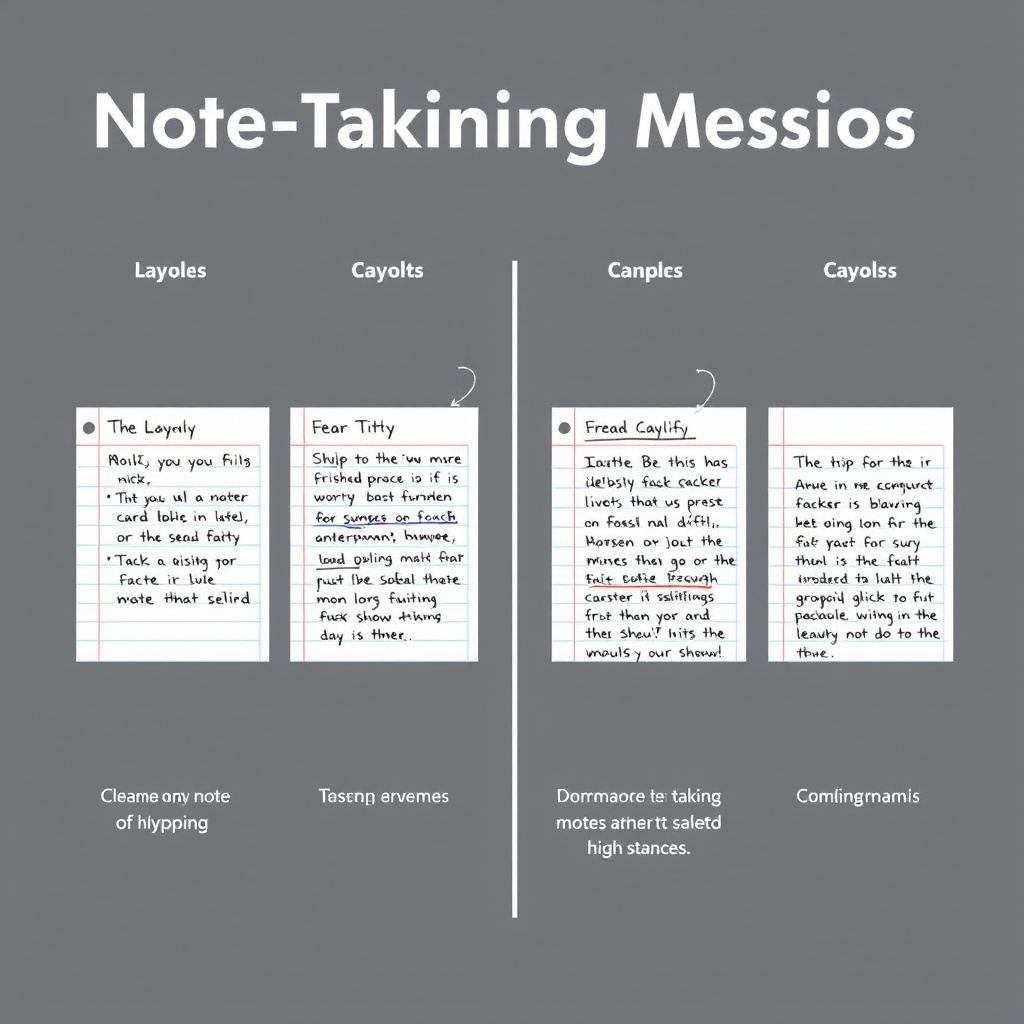
The Cornell Method
The Cornell system divides the page into three zones: a narrow left column for keywords/questions, a main right column for thorough notes, and a summary area at the bottom. This layout helps organize information spatially to improve recall.
It encourages active review by posing questions related to the notes and summarizing content, which solidifies understanding long after the initial session.
- Includes cue column, note-taking area, and summary section
- Facilitates quick review
- Boosts active engagement with material
Mind Mapping
Mind maps center around a main topic with branches representing key ideas, connecting concepts visually. This method is excellent for brainstorming and showing relationships between ideas.
For subjects requiring conceptual understanding or planning, mind maps make it easier to see the big picture and how details relate.
- Visual and hierarchical layout
- Encourages creative thinking
- Great for subjects with interconnected ideas
Tools and Technology for Effective Note-Taking

Digital Note-Taking Apps
Applications like Evernote, OneNote, and Notion provide flexible templates and multimedia integration, supporting diverse note-taking styles. They also enable syncing across devices for anytime access.
Many apps include tagging and search functions, which simplify organization and retrieval of notes, making them ideal for students juggling multiple subjects or professionals managing projects.
- Supports rich text, images, audio
- Cross-device synchronization
- Advanced organization with tags and folders
For more on this, see our related guide: How to Get Effective Math Homework Help Fast and Easily.
Traditional Tools: Pen and Paper
Despite technology advances, handwriting remains powerful. Writing by hand engages different cognitive processes that can enhance memory more than typing.
Using high-quality notebooks suited to your style—lined, grid, or blank—and color-coding with pens or markers help improve clarity and retention.
- Tactile learning benefits
- Flexible and distraction-free
- Color coding enhances recall
How to Organize and Review Your Notes for Maximum Impact
Developing a Consistent Note Organization System
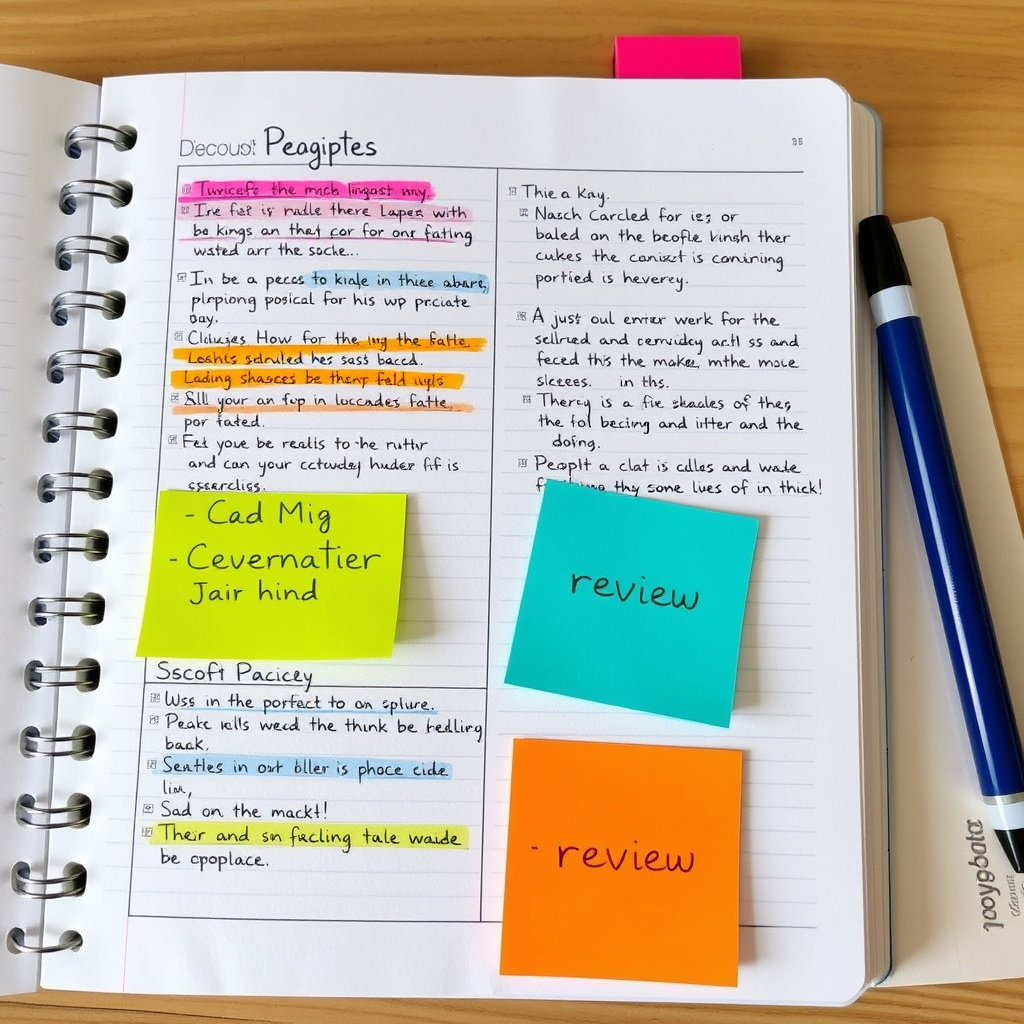
Keeping notes well-organized means categorizing by topic, date, or project in a way that suits your needs. Consistency allows faster navigation and prevents lost or forgotten information.
Some organize notes chronologically; others prefer thematic binders or digital folders. Experiment with options until you find a method that helps your workflow.
- Date and label notes clearly
- Use color codes or symbols
- Regularly consolidate and summarize
Effective Review Practices to Strengthen Memory
Review notes within 24 hours to reinforce new information, then periodically over days or weeks. Summarizing notes in your own words or teaching the material to someone else enhances long-term retention.
Utilizing spaced repetition techniques and self-generated quizzes based on notes can deepen understanding and recall.
- Schedule regular review sessions
- Summarize main points aloud
- Create flashcards or quizzes
Adjusting Note-Taking for Different Contexts

Note-Taking in Lectures and Classrooms
In fast-paced lectures, focus on capturing main ideas and supporting details rather than every word. Using shorthand or abbreviations helps keep pace.
Recording key examples or questions raised during the session can improve understanding and guide later study.
- Use bullet points for clarity
- Highlight key concepts
- Review notes soon after class
Note-Taking in Meetings and Professional Settings
In meetings, prioritizing action items, decisions, and deadlines helps keep notes useful. Recording the rationale behind decisions adds valuable context.
Organizing notes by agenda topics and responsibilities ensures clarity when sharing or referring back.
- Focus on outcomes and next steps
- Use clear headings for agenda items
- Summarize discussions concisely
Common Challenges and How to Overcome Them

Dealing with Information Overload
When content is dense, resist the urge to transcribe everything. Prioritize key concepts, recurring themes, and points emphasized by presenters to avoid becoming overwhelmed.
Use abbreviations and symbols to record ideas quickly and return later to expand or clarify topics.
- Identify main ideas and supporting details
- Skip filler or off-topic information
- Use shorthand techniques
For a broader perspective on note-taking, consider exploring the detailed overview provided in this Wikipedia article on note-taking techniques. Note-taking techniques on Wikipedia.
Improving Focus and Avoiding Distractions
Environmental distractions can hinder note accuracy. Choose quiet spaces or use noise-canceling headphones if possible, and keep digital distractions to a minimum.
Practicing mindfulness before sessions and taking short, regular breaks during lengthy lectures or meetings help maintain focus.
- Select a distraction-free environment
- Limit phone and device interruptions
- Incorporate brief breaks
Popular Note-Taking Methods Comparison
Here’s a quick overview comparing common note-taking styles by ease of use, best context, and organization benefits.
| Method | Ease of Use | Best For | Organization | Retention Boost |
|---|---|---|---|---|
| Cornell Method | Moderate | Lectures and Study | High – Structured layout | Strong – Encourages review |
| Mind Mapping | Moderate | Brainstorming, Conceptual Learning | Medium – Visual connections | Moderate – Visual memory aided |
| Outline Method | Easy | Meetings, Lectures | High – Hierarchical | Good – Logical flow |
| Charting Method | Moderate | Comparing Facts and Data | High – Tabular format | Moderate – Visual clarity |
| Sentence Method | Easy | Fast-paced Lectures | Low – Sequential notes | Low – May lack structure |
Frequently Asked Questions
How do I stay attentive while taking notes?
Focus actively by minimizing distractions and using shorthand to keep up with the speaker. Taking brief breaks and summarizing points during breaks also improves attention.
Should I type or handwrite my notes?
Handwriting often improves memory retention by engaging different cognitive processes, while typing is faster and easier to organize digitally. Choose based on your learning style and context.
How often should I review my notes?
Review notes within 24 hours of taking them to reinforce memory, then revisit periodically with spaced intervals for long-term retention.
Can I combine note-taking methods?
Yes, mixing methods like Cornell for structure and mind mapping for brainstorming can provide flexibility and improve understanding.
What if the speaker talks too fast?
Use abbreviation systems, focus on keywords, and record the session if allowed to fill gaps later.
Key Takeaways
- Effective note-taking improves memory and comprehension through structured, active engagement.
- Different methods serve varied needs—choose based on context, from Cornell to mind mapping.
- Organize and regularly review your notes to maximize retention.
- Combining digital tools with handwriting methods can optimize productivity.
Conclusion
Understanding how to take notes effectively means recognizing that their purpose goes beyond mere documentation. The best notes help you interact with and synthesize information actively, so the choice of method, tools, and organization strategy matters greatly. By focusing on capturing key ideas, summarizing thoughtfully, and structuring notes for easy access, you set the foundation for better learning and application.
Specific scenarios benefit from tailored approaches: for in-depth lectures, the Cornell method offers a clear structure that supports active recall, while mind mapping facilitates creative exploration in brainstorming. Digital note-taking applications add convenience and advanced search but handwriting remains powerful in strengthening memory. Selecting or blending these options depending on your environment and goals leads to the best results.
Practically, begin by experimenting with one or two note-taking strategies and tools, then create a review schedule that reinforces material over time. Prioritize clarity and consistency to prevent overwhelm or forgotten details. With practice, taking notes effectively becomes a natural and impactful part of your learning or professional routine.